
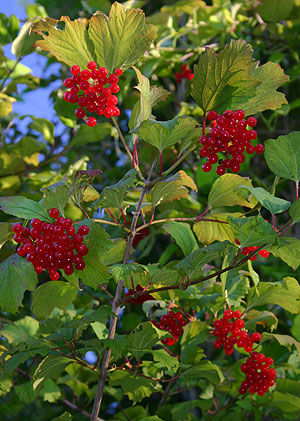

Viburnum trilobum (or V. opulus var. americanum)
Our very own version of cramp bark in the Pacific Northwest.
While highbush cranberry bark contains salicylates, it is most recognized for its potent antispasmodic properties, rather than being a direct, drop-for-drop replacement for aspirin's analgesic power.
ZONE: 2-7
POLLINATOR: No
DEER RESISTANT: Moderate
DROUGHT TOLERANT: No
EVERGREEN: No
SPREADS BY SEED: Yes, takes 2yrs to germinate in the wild
NEEDS A CROSS POLLINATOR: If you want heavier yields
AGE OF PLANT: Estimated 1yrs old (current stock)
MATURE HEIGHT: 8-12 ft tall & wide
Burke Herbarium Image Collection
Developed and hosted by the University of Washington Herbarium at the Burke Museum, this site brings together 109,079 photographs and contributions from numerous photographers and botanists.
View this plant...
https://burkeherbarium.org/imagecollection/taxon.php?Taxon=Viburnum+opulus+var.+americanum
HIGHBUSH CRANBERRY
PLANTING & GROWING
Highbush Cranberry thrives in full to partial sun with moist, well-drained soil. Plant in spring or fall, spacing 4–5 feet apart for hedges, digging a hole twice as wide as the root ball. It requires consistent moisture, and prefers acidic to neutral pH.
MEDICINAL BENEFITS
* These statements have not been evaluated by the Food and Drug Administration. These products are not intended to diagnose, treat, cure, or prevent any diseases.
FLAVOR & PAIRING