
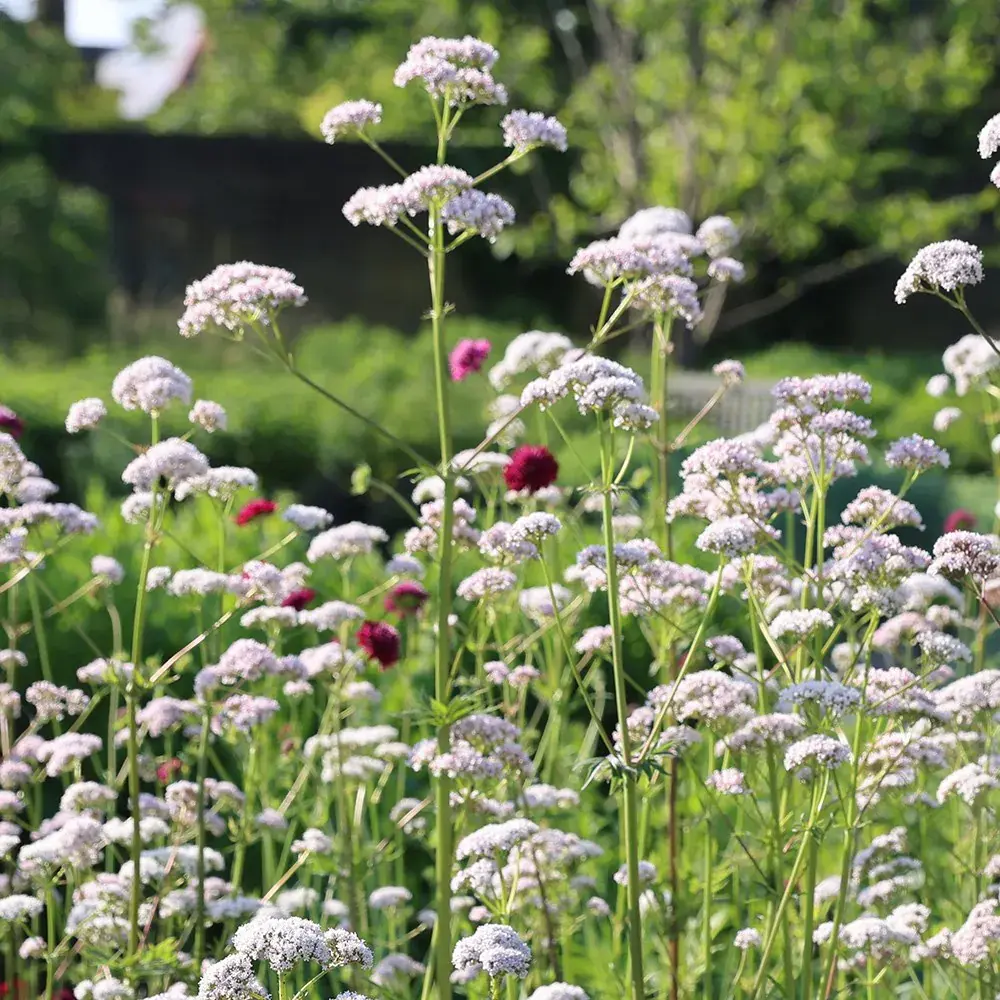

Enjoy a delicious sweet fragrance and support the bees with these valerian plant starts. Flowers are a creamy light pink, strongly fragrant and attract bees, roots are medicinal, and a lovely ornamental that can grow anywhere from 3-6+ ft tall. Perennial.
Roots are a traditional nervine solution to help calm the nerves. The flowers have the same ability to a lesser degree. Floral water has always been one of my favorite ways to enjoy this plant.
100 seeds per packet
VALERIAN COMMON SEEDS
PLANTING & GROWING
When to plant
In the spring after the last frost and when the soil has warmed. You can also plant seeds in late winter or fall so they can go through a cold winter and germinate in the spring.
Where to plant
Valerian can grow in full sun or partial shade, but it prefers rich, moist soil.
How to plant seeds
Sow seeds directly into the garden bed or start them indoors in containers about four weeks before transplanting. Seeds need light to germinate, so don't bury them. Sow them on the soil surface and lightly cover them with ¼ inch of soil outdoors or a thin layer of perlite or vermiculite indoors. Keep the soil moist until they germinate, which can take 7–21 days. Once germinated, transplant them outside when they are 5–6 inches tall. Thin them to 12–18 inches apart, in rows 3 feet apart.
Other tips
Use fresh seeds, as old valerian seed loses viability after a year. Even fresh seeds usually germinate at only 60–70 percent. Valerian will also self seed, so you may find new plants growing in your garden. You can harvest the roots in the fall of the first or second year.
MEDICINAL BENEFITS
- Insomnia
- Anti-anxiety
- Sleep quality
- Restlessness
- Phytoestrogen (can combat symptoms of menopause by helping to balance estrogen levels.)
* These statements have not been evaluated by the Food and Drug Administration. These products are not intended to diagnose, treat, cure, or prevent any diseases.
FLAVOR & PAIRING
Bittersweet botanical with a perfumed, slightly musky or woodsy aroma. Slightly bitter, and is often described as being similar to black licorice. Pairs well with lemon, honey, spearmint, almond, citrus, and rosemary.