
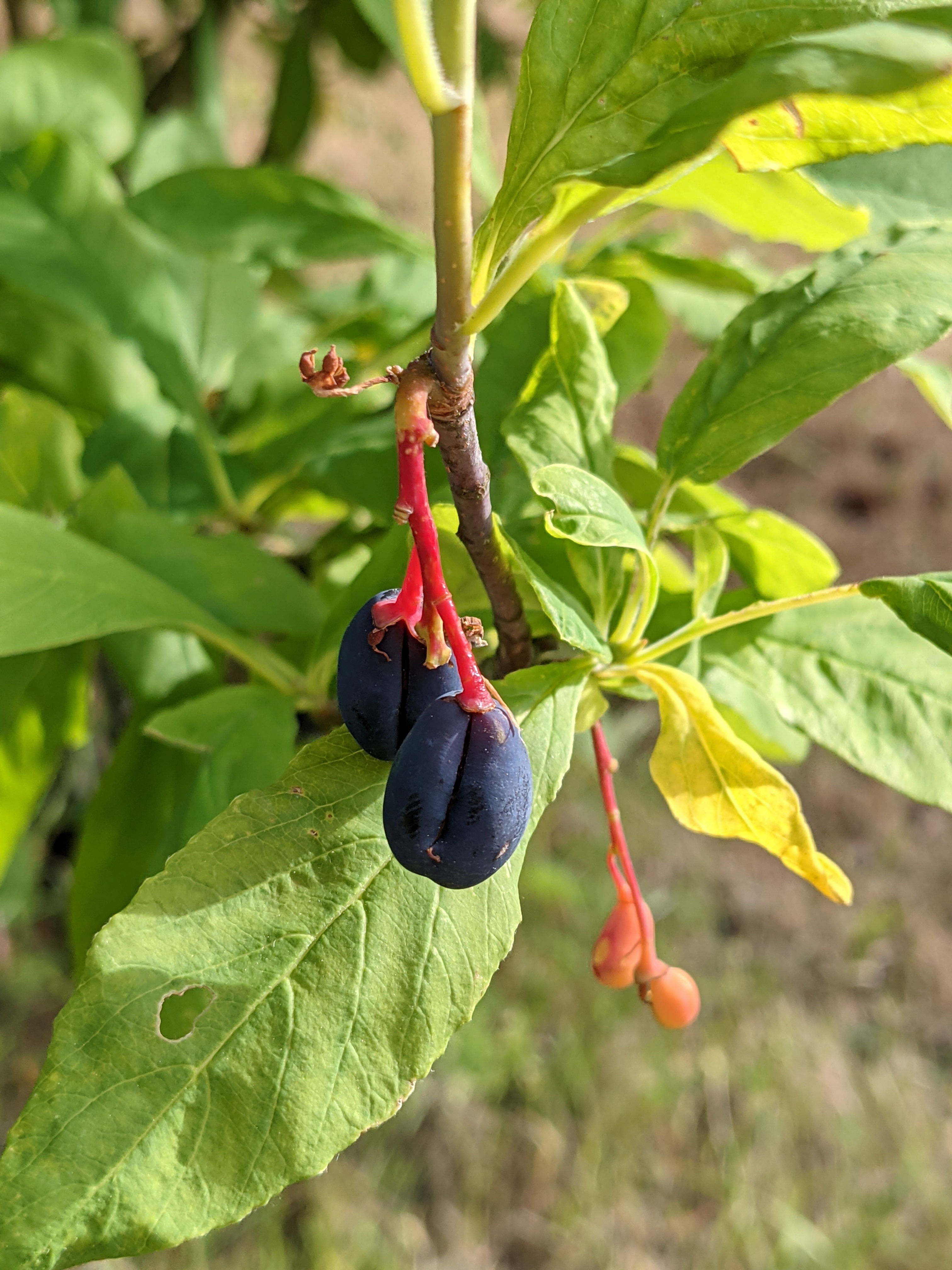

(Oemleria cerasiformis)
A deciduous multi-stemmed shrub that produces clusters of white flowers in very early spring. This shrub is one of the earliest plants to bloom in Washington and grows in open forests, forest edges, and riparian thickets. It provide an early nectar source for hummingbirds and native bees.
Excellent for erosion control; landscape uses include hedgerows, windbreak, woodland and pollinator gardens
Fun fact the leaves when crushed smell just like cucumber.
ZONE: 6–10
POLLINATOR: Yes (provides crucial early-spring nectar)
DEER RESISTANT: Moderate
DROUGHT TOLERANT: Yes "highly"
EVERGREEN: No, it is deciduous
SPREADS BY SEED: No, this plant spreads by its rhizomes and branches that touch the ground can readily root and form new plants.
NEEDS A CROSS POLLINATOR: Yes, requires male plant. To distinguish whether or not you have a female plant, the female flowers smell like cucumber.
AGE OF PLANT: 1-2yr (roots fully mature)
MATURE HEIGHT: 5-15ft by 5-15
OSO BERRY INDIAN PLUM
PLANTING & GROWING
This deciduous shrub is best planted in fall or early spring in well-drained, moist soil with part shade. Dig a hole twice as wide as the root ball, ensuring both male and female plants are included for fruit. It tolerates clay and drought once established.
MEDICINAL BENEFITS
- A tea or decoction made from the bark was used to treat tuberculosis. It also served as a purgative, tonic, and to treat internal issues such as hemorrhaging (spitting blood) and digestive issues.
- Fruit contains vitamin C, vitamin K, & potassium
* These statements have not been evaluated by the Food and Drug Administration. These products are not intended to diagnose, treat, cure, or prevent any diseases.
FLAVOR & PAIRING
Osoberry have a unique, complex flavor, often described as a mix of bitter-sweet cherry, plum, cucumber, and sometimes cocoa or cedar, with better, sweeter, more palatable flavor when fully ripe or overripe. They are ideal for making shrubs (vinegar-based syrup), cocktails, and jams.